How much cash fits in the Hindenburg?
Packed perfectly tight, the Hindenburg holds $177B in $1 bills, $3.54T in $20s or $17.7T in $100s. That is 177 billion bills: about 177,047 t of paper, and 5,610 years to count at one bill a second.
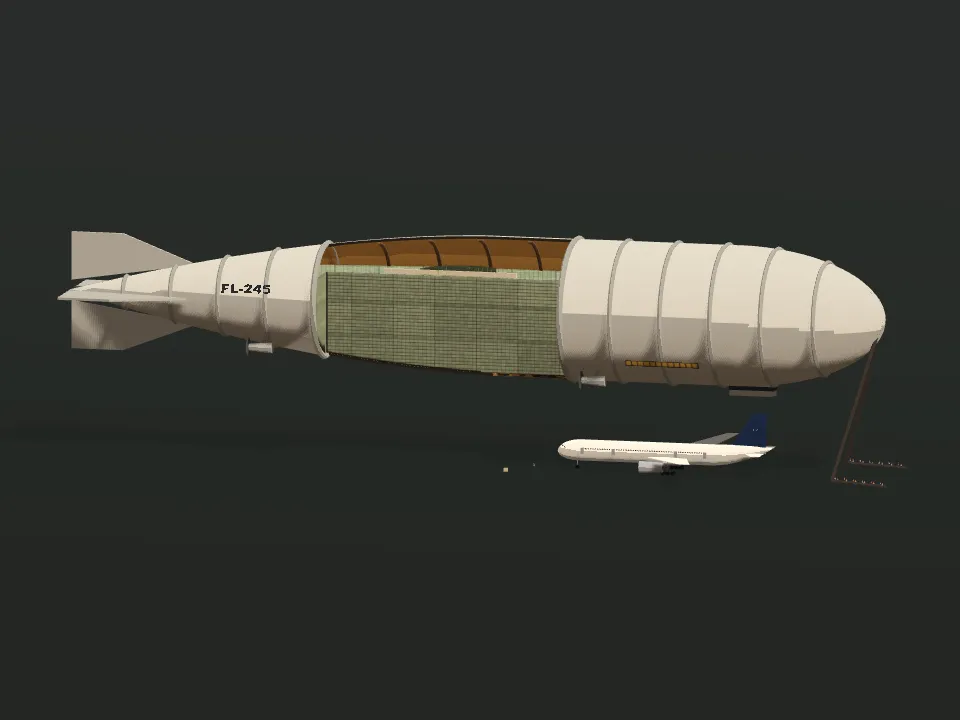
- $1s
- $177B
- $20s
- $3.54T
- $100s
- $17.7T
Hindenburg size
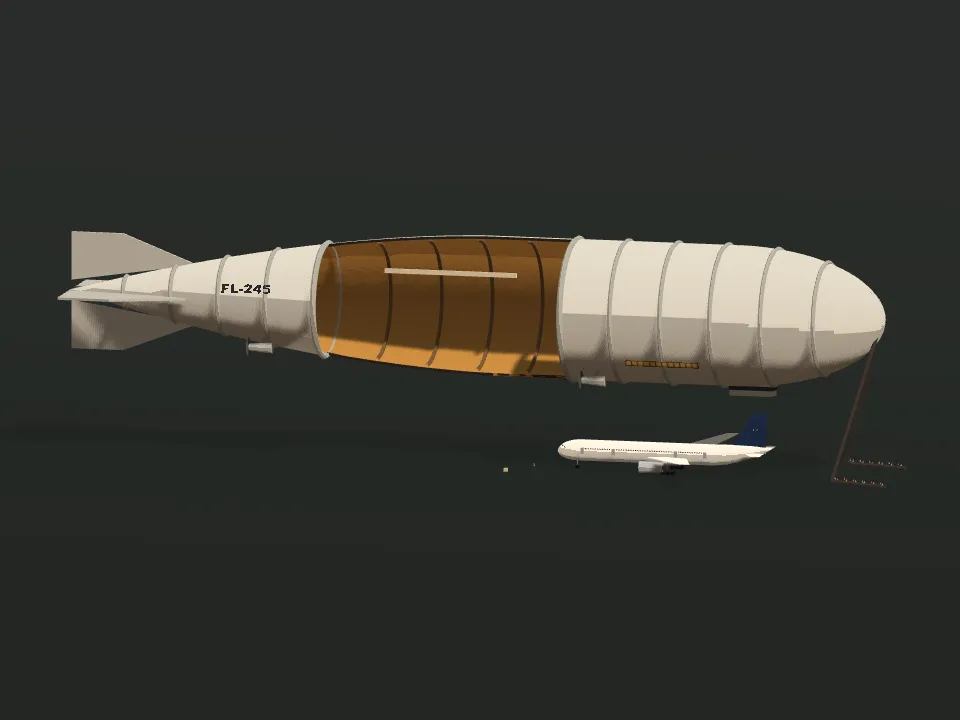
Gas-cell capacity; the hull around the cells was a little larger.
The bill
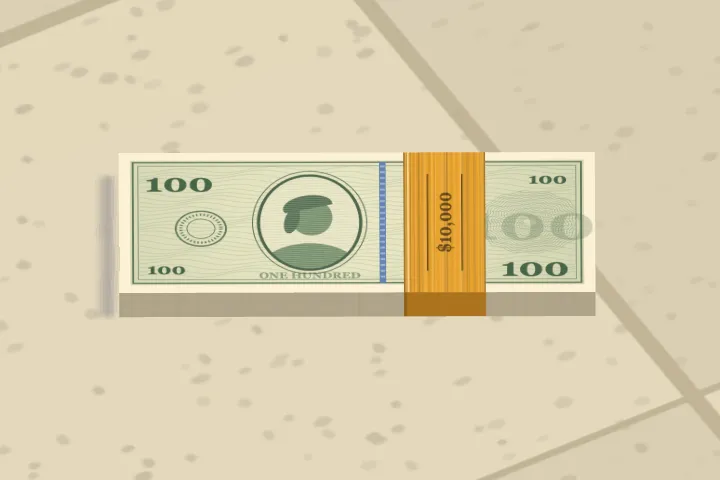
- Size
- 156 × 66.3 mm
- Thick
- 0.109 mm (0.0043 in)
- Weight
- about 1 g, any bill
The same for $1, $20 and $100 bills. Source: US Bureau of Engraving and Printing, currency FAQ (“The approximate weight of a note, regardless of denomination is one gram”), read Nov 20, 2026. The bundle beside every vault in the game is one strap of 100 bills.
Perfectly tight, and in whole straps
Our source gives a volume, not a shape, so whole straps can’t be counted on paper. In the vaults whose shape we know and that hold at least one whole strap, whole straps fill 22.8–99.9% of the perfectly tight count; smaller ones lose more. The game scores against the perfectly tight number, so everyone plays against the same rule.
The calculation
- The stated volume200,000 m³
- In litres1 m³ = 1,000 L, so 200,000 × 1,000 = 200,000,000 L
- One bill156 × 66.3 × 0.10922 mm = 1,129.64 mm³
- Bills that fit200,000,000 L = 200,000,000,000,000 mm³, ÷ 1,129.64 mm³ = 177,047,458,428.14 bills, 177 billion in round numbers
- In money177,047,458,428.14 × $1 = $177,047,458,428 · 177,047,458,428.14 × $20 = $3,540,949,168,563 · 177,047,458,428.14 × $100 = $17,704,745,842,814
- Weight and time177,047,458,428 bills × 1 g ≈ 177,047 t · 177,047,458,428 seconds ≈ 5,610 years
Check it yourself
Change any size to see what it would hold. With the sizes we use, the result matches the game’s number.
The surprise
The Hindenburg airship of $100s ($17.7T) beats a Panama Canal lock chamber of $20s ($7.61T), though it is 2.1 times smaller.
Hindenburg: 177,047,458,428.14 bills × $100 = $17,704,745,842,814 · neopanamax-lock-chamber: 380,474,988,162.08 bills × $20 = $7,609,499,763,242 · $17,704,745,842,814 > $7,609,499,763,242 · 380,474,988,162.08 ÷ 177,047,458,428.14 = 2.15 times the space
The Hindenburg airship of $20s ($3.54T) holds almost as much as Wembley Stadium of $1s ($3.54T), which is 20 times bigger.
Hindenburg: 177,047,458,428.14 bills × $20 = $3,540,949,168,563 · wembley-stadium: 3,540,949,168,562.83 bills × $1 = $3,540,949,168,563 · $3,540,949,168,563 ÷ $3,540,949,168,563 = 1 · 3,540,949,168,562.83 ÷ 177,047,458,428.14 = 20 times the space
The Hindenburg airship of $100s ($17.7T) would cover all $2.39T of US currency in circulation at the end of 2025 7 times over.
177,047,458,428.14 bills × $100 = $17,704,745,842,814 · $17,704,745,842,814 ÷ $2,394,900,000,000 = 7.39
Sources
- Bundesarchiv (German Federal Archives)primary
Mit einer Länge von 245 Metern und einem Traggasvolumen von 200.000 Kubikmetern war der Zeppelin dafür konzipiert, mit Helium betrieben zu werden.
bundesarchiv.de · read Nov 20, 2026 - Smithsonian National Air and Space Museum
Its 16 gas cells held up to 200,000 cubic meters (7,062,900 cubic feet) of hydrogen gas.
airandspace.si.edu · read Nov 20, 2026
Spotted an error?
Guess the next vault before you see the answer.
Play today’s Fillionaire